If you’ve ever dreamed of waking up to the aroma of freshly baked pastries wafting through your home, then this Classic Flaky Croissants from Scratch Recipe is exactly what you need to bring that dream to life. These croissants are the perfect blend of buttery, airy layers with that unmistakable crisp exterior that makes every bite absolutely divine. Whether you’re an experienced baker or a passionate home cook looking to up your game, this recipe walks you through each step to craft croissants that rival your favorite bakery’s, right from your own kitchen. Get ready to fall in love with the art of pastry-making and savor every flaky, buttery moment!

Ingredients You’ll Need
Simple ingredients make for extraordinary croissants, and each one plays an important role. From the flour that gives structure to the rich butter creating those irresistible flaky layers, every ingredient is essential to making your croissants truly shine.
- 4 cups (500g) all-purpose flour: Provides the perfect gluten structure for tender, layered dough.
- 1/4 cup (50g) granulated sugar: Adds just the right touch of sweetness and helps with browning.
- 1 tablespoon (10g) salt: Enhances the flavor and balances the sweetness.
- 1 tablespoon (10g) active dry yeast: Leavens the dough, making it light and airy.
- 1 1/4 cups (300ml) warm milk: Activates the yeast and hydrates the dough for softness.
- 2 tablespoons unsalted butter, melted: Enriches the dough for added moisture and tenderness.
- 1 cup (225g) unsalted butter, cold and shaped into a flat square: This butter block creates the flaky layers that croissants are famous for.
- 1 egg: Adds richness and helps with the dough’s golden color when baked.
- 1 tablespoon milk: Mixed with the egg for a beautiful, glossy egg wash finish.
How to Make Classic Flaky Croissants from Scratch Recipe
Step 1: Mix and Knead the Dough
Start by whisking together the flour, sugar, and salt in a large bowl or stand mixer. Next, dissolve your active dry yeast in the warm milk and watch for it to become delightfully foamy – that’s the sign your yeast is active and ready to work its magic. Combine the yeast mixture and melted butter with the dry ingredients and knead away until the dough becomes smooth and elastic, which usually takes about 3 to 5 minutes. Shape your dough into a neat rectangle and pop it into the refrigerator for an hour to rest and chill. This rest will help your dough become easier to work with when it’s time to laminate.
Step 2: Prepare the Butter Block
The butter block is a key secret to achieving those gorgeous flaky croissant layers. Place the cold butter between parchment papers and use a rolling pin to flatten it into a perfect 6-inch square. If your butter starts to soften too much and becomes sticky, no worries! Just chill it again for a few minutes to keep it perfectly firm. Keeping this butter cold but pliable is essential for a slick lamination process.
Step 3: Encapsulate the Butter with Dough
Roll out your chilled dough into a 12-inch square, ensuring it’s nice and even. Place your butter block diagonally on the dough, like a diamond sitting in the center. Then fold each corner carefully over the butter until it’s completely wrapped up like a precious package. This step is where the magic of layering truly begins, setting the stage for that divine flakiness.
Step 4: First Fold (Turn)
Roll the dough out again, this time into a long rectangle about 8 by 20 inches. Now fold it into thirds, similar to folding a letter. This is your first “turn,” where you build those many delicate layers of butter and dough that croissants are celebrated for. Wrap the dough tightly in plastic wrap and chill it for 30 minutes to keep everything firm and ready for the next folds.
Step 5: Repeat Folds
Repeat the rolling and folding process two more times, giving you a total of three turns. It might sound like a lot, but this repetition is what produces those spectacular flaky layers. Just remember to always keep your dough cool to prevent the butter from melting, which is crucial for the texture you’re aiming to achieve.
Step 6: Roll Out the Final Dough
After your dough has had its final chill, it’s time to roll it out into a large rectangle about 1/4-inch thick. This thin layer is what allows your croissants to puff beautifully in the oven, creating that iconic airy interior with crisp, golden layers on top.
Step 7: Cut Triangles
Using a sharp knife or pizza cutter, trim any uneven edges and cut your dough into triangles approximately 5 inches wide at the base. Precision here helps give your croissants a uniform shape, ensuring even baking and a pretty presentation.
Step 8: Shape Croissants
Gently stretch the base of each triangle and roll toward the tip, creating that classic crescent form everyone recognizes and loves. Take your time with this step to prevent tearing and to give your croissants their lovely, welcoming curve.
Step 9: Proof Croissants
Now the wait begins, but it’s worth it! Cover your shaped croissants loosely and let them rise at room temperature for 1.5 to 2 hours. During this time, they’ll puff up and develop a slightly airy surface, signaling that they’re ready to bake.
Step 10: Preheat Oven and Prepare Egg Wash
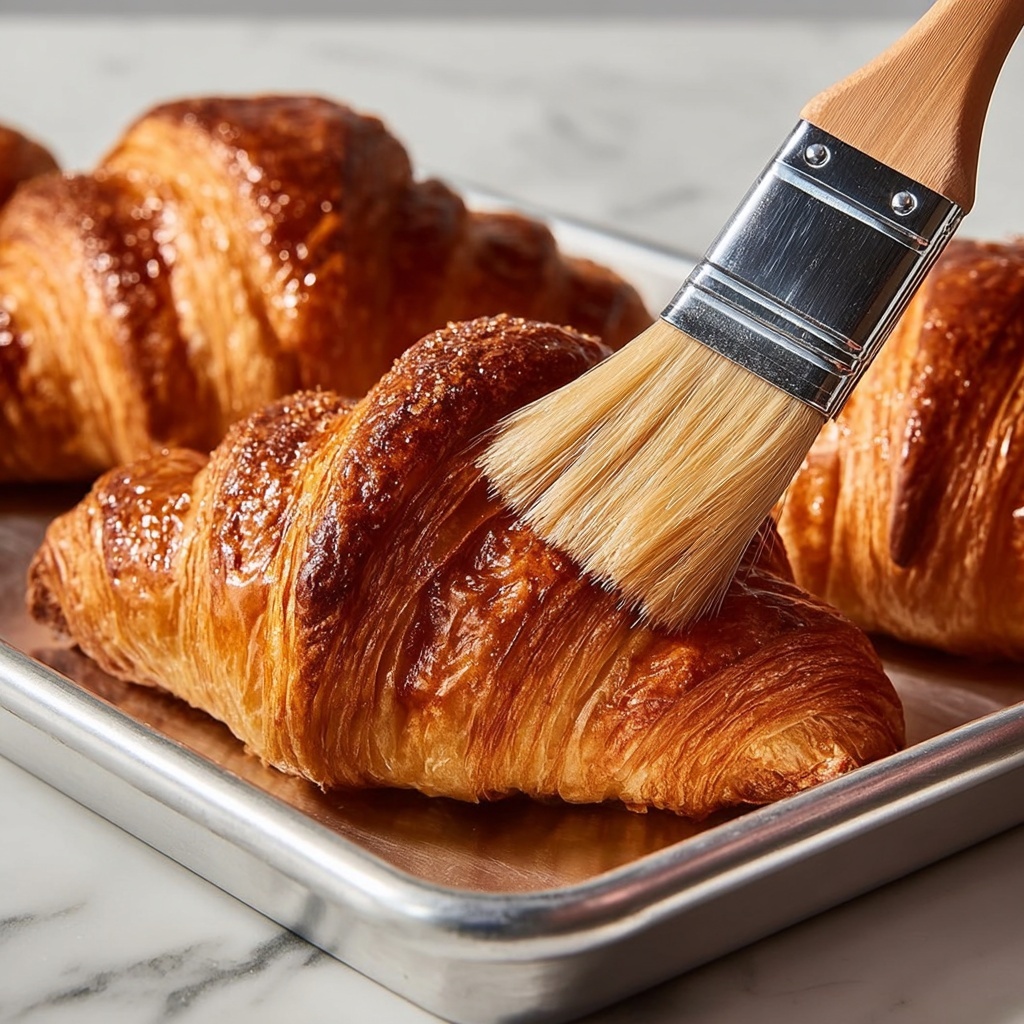
Preheat your oven to 400°F (200°C). Mix together your egg and milk to create a luscious egg wash. Brushing this on the croissants right before baking imparts that irresistible golden, glossy finish you’ve been dreaming of.
Step 11: Bake Croissants
Arrange your croissants on a baking sheet and slide them into the oven for 18 to 22 minutes. Keep an eye on them, rotating the pan halfway to ensure that every side bakes evenly. You want that deep golden brown color and fully puffed texture that lets you know they’re done to perfection.
Step 12: Cool
Once baked, transfer your croissants to a wire rack to cool for at least 10 minutes. Cooling is crucial as it allows the buttery layers to set so your croissants don’t collapse and retain that light, flaky texture that makes this Classic Flaky Croissants from Scratch Recipe so special.
How to Serve Classic Flaky Croissants from Scratch Recipe

Garnishes
Some light touches can elevate your croissants instantly. A sprinkle of powdered sugar lends a delicate sweetness, while a dab of homemade jam or a thin spread of honey brings a fruity contrast that complements the buttery layers perfectly. For a savory twist, a slice of ham and melted cheese tucked inside creates a cozy breakfast treat.
Side Dishes
Serve these croissants alongside fresh fruit salads, strawberries dipped in whipped cream, or a crisp green salad with vinaigrette for a balanced and vibrant meal. Pairing them with freshly brewed coffee or a creamy latte makes breakfast or brunch feel like a special occasion every time.
Creative Ways to Present
Why not mix things up and turn your croissants into mini sandwiches filled with smoked salmon, cream cheese, and dill? Or, create elegant croissant bread pudding by tearing them into pieces and soaking in a custard mix before baking. These ideas let you enjoy your Classic Flaky Croissants from Scratch Recipe in delightful new ways that surprise and satisfy.
Make Ahead and Storage
Storing Leftovers
If you have leftovers, keep your croissants fresh by storing them in an airtight container at room temperature. They’re best enjoyed within 2 days to preserve that irresistible flakiness and tender crumb. Avoid refrigeration as it tends to dry them out quickly.
Freezing
For longer storage, freeze your croissants individually by wrapping each one tightly in plastic wrap and then placing them in a freezer bag. When you’re ready to enjoy, thaw them at room temperature before reheating to get back that fresh-baked taste.
Reheating
The secret to reviving day-old croissants is a quick blast in a preheated oven at 350°F (175°C) for about 5 to 7 minutes. Skip the microwave as it steams the croissants, making them lose their crisp, flaky texture. Reheating in the oven brings back that perfect crunch and melt-in-your-mouth goodness.
FAQs
Can I use salted butter for the dough and butter block?
It’s best to use unsalted butter so you can control the salt level in your croissants precisely. Salted butter may add excess saltiness and affects the dough’s flavor balance.
How important is chilling the dough during the lamination process?
Chilling between folds is crucial because it keeps the butter solid and separate from the dough layers, which creates the flaky, layered texture that defines croissants.
What’s the difference between croissants and puff pastry?
While both involve layering butter and dough, croissant dough is yeast-leavened, giving it a light, airy texture, whereas puff pastry relies solely on steam for leavening, producing a crispier, more brittle texture.
Can I make croissants ahead and freeze before baking?
Absolutely! After shaping, you can freeze the croissants before the final proof. When ready, let them thaw and rise fully before baking for convenient fresh croissants anytime.
Why do my croissants sometimes turn out dense instead of flaky?
Common culprits include butter melting into the dough during rolling, inadequate folding or chilling, or not allowing them to proof fully. Keeping ingredients cold and following the turn process ensures those signature flaky layers.
Final Thoughts
There’s something incredibly rewarding about creating gorgeous, flaky croissants from scratch, and this Classic Flaky Croissants from Scratch Recipe is your ticket to buttery, layered perfection at home. Once you master the technique, you’ll find it hard to go back to store-bought pastries. So grab your rolling pin and butter block, and treat yourself to this delightful baking adventure—you deserve every flaky bite!
Print
Classic Flaky Croissants from Scratch Recipe
- Prep Time: 30 minutes
- Cook Time: 22 minutes
- Total Time: 2 hours 30 minutes
- Yield: 12 servings
- Category: Pastry
- Method: Baking
- Cuisine: French
Description
Classic Flaky Croissants from Scratch are buttery, flaky, and perfectly layered pastries that require a few hours of chilling and folding to achieve their signature texture. This detailed recipe guides you through making croissants from basic ingredients using a traditional laminating process to encase cold butter and create multiple layers for flakiness. The croissants are proofed for a fluffy rise, brushed with an egg wash for shine, and baked to golden-brown perfection.
Ingredients
Dough Ingredients
- 4 cups (500g) all-purpose flour
- 1/4 cup (50g) granulated sugar
- 1 tablespoon (10g) salt
- 1 tablespoon (10g) active dry yeast
- 1 1/4 cups (300ml) warm milk
- 2 tablespoons unsalted butter, melted
Butter Block
- 1 cup (225g) unsalted butter, cold and shaped into a flat square
Egg Wash
- 1 egg
- 1 tablespoon milk
Instructions
- Mix and knead the dough: In a large bowl or stand mixer, combine the flour, sugar, and salt. Dissolve the active dry yeast in warm milk and let it sit until foamy, about 5 to 10 minutes. Add the yeast mixture and melted butter to the dry ingredients and knead until a smooth dough forms, about 3 to 5 minutes. Shape into a rectangle, wrap in plastic wrap, and refrigerate for 1 hour.
- Prepare the butter block: Place cold unsalted butter between two sheets of parchment paper. Use a rolling pin to shape it into a 6-inch square. Chill it again if it becomes too soft to maintain firmness.
- Encapsulate the butter with dough: Roll the chilled dough into a 12-inch square. Place the butter diagonally in the center to form a diamond shape. Fold the dough corners over the butter to enclose it completely like wrapping a gift.
- First fold (turn): Roll the dough with butter into a long rectangle about 8 by 20 inches. Fold into thirds like a letter to complete the first turn. Wrap and chill in the refrigerator for 30 minutes.
- Repeat folds: Repeat rolling, folding into thirds, and chilling two more times for a total of three turns, ensuring the dough stays cold to build flaky layers.
- Roll out final dough: After the last chill, roll the dough into a large rectangle about 1/4-inch thick to prepare for shaping.
- Cut triangles: Trim edges and cut dough into triangles approximately 5 inches wide at the base using a sharp knife or pizza cutter.
- Shape croissants: Starting at the wide base of each triangle, gently stretch and roll toward the tip to form a crescent shape.
- Proof croissants: Cover the shaped croissants loosely and allow them to rise at room temperature for 1.5 to 2 hours until puffed and slightly risen.
- Preheat oven and prepare egg wash: Preheat oven to 400°F (200°C). Beat the egg and milk to make an egg wash and brush over each croissant for a glossy finish.
- Bake croissants: Place croissants on a baking sheet and bake for 18 to 22 minutes until they are fully puffed and deep golden brown. Rotate pan halfway for even browning.
- Cool: Remove croissants from oven and cool on a wire rack for at least 10 minutes to set the flaky layers before serving.
Notes
- Keep the dough and butter cold throughout the folding process to ensure proper layering and flakiness.
- Do not skip chilling times, as they help the dough relax and keep the butter firm.
- If the butter softens too much during rolling, chill it briefly before continuing.
- Proof the croissants until nearly doubled in size for the lightest texture.
- For best results, use a stand mixer with a dough hook, though hand kneading works as well.
- Store leftovers in an airtight container at room temperature for up to 2 days or freeze for longer storage.