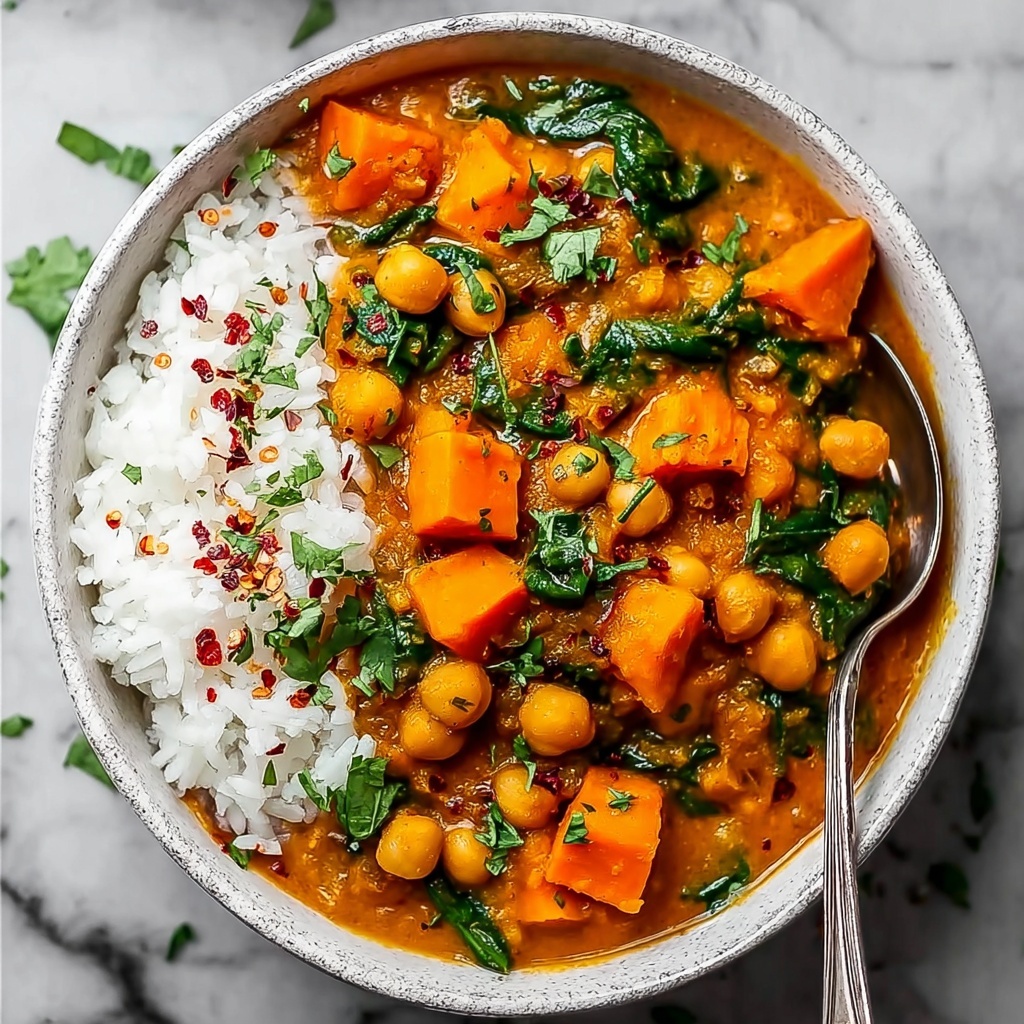
There is something truly comforting about a bowl of curry that wraps you in waves of warmth and spice. The Sweet Potato and Chickpea Curry Recipe is just the kind of dish that invites you to slow down, savor every bite, and maybe even curl up with a good book afterward. It brings together creamy coconut milk, tender cubes of sweet potato, and the satisfying heartiness of chickpeas, all simmering gently in a fragrant, spiced sauce. Whether you are craving a cozy weeknight meal or a fulfilling vegetarian dinner, this curry hits that perfect balance of rich texture and layered flavor that you will want to make again and again.
Rooted in South Asian cooking traditions, curries like this one have been embraced and adapted in home kitchens throughout the world. Sweet potatoes and chickpeas are common ingredients in many Indian and Middle Eastern inspired dishes, prized for their earthiness and ability to soak up seasonings. Over time, recipes like the Sweet Potato and Chickpea Curry have come to represent more than just a meal. For many, it evokes family dinners where the table overflows with warmth, spices, and laughter shared over plates heaped with fragrant rice or flatbread. It brings to mind memories of comfort during chilly evenings or festive gatherings when simple ingredients come together to form something truly special.
When you choose to make this Sweet Potato and Chickpea Curry Recipe, you are not just following a recipe—you are entering into a culinary experience that celebrates wholesome flavors and nourishing ingredients. In this article, I’ll guide you step-by-step through making a version that balances spice and creaminess without overwhelming. You will discover helpful tips on ingredient choices, techniques, and how to personalize it to your taste. This recipe stands out because it uses straightforward methods that bring out the true essence of each ingredient, making it accessible for any home cook who loves food that comforts and satisfies deeply.
Why You’ll Love This Sweet Potato and Chickpea Curry Recipe
One of the most appealing things about this Sweet Potato and Chickpea Curry Recipe is how simple it is to prepare without sacrificing any depth of taste. The ingredients come together quickly, and there are no complicated steps that require special kitchen gadgets or intense culinary skills. You start by creating a flavorful base with onions, garlic, and ginger, then layer in warming spices and cook everything gently until it melts into a luscious curry. This ease makes it perfect for busy weeknights, yet it still feels special enough for guests or meal prepping for the week ahead.
Another reason this curry tends to please just about everyone is its versatility and ability to satisfy a crowd. The combination of sweet potatoes and chickpeas offers a lovely mix of sweetness and earthiness with just the right amount of protein and fiber to keep you full and content. Plus, the creamy coconut milk soothes the spices and adds that luxurious mouthfeel everyone loves. Whether served as a solo meal or part of a larger feast, it’s reliable comfort food that appeals to a wide range of tastes and dietary preferences, so there will be plenty for everyone to enjoy.
Making this curry at home also means you get to control every aspect of the final dish, from the level of spice to the thickness of the sauce. Ordering curry out can be an adventure, sometimes arriving too watery or too spicy for your liking. This recipe allows you to adjust the seasoning exactly to your preference and ensures that nothing is lost in translation. Preparing the Sweet Potato and Chickpea Curry Recipe yourself lets you embrace the fragrant aromas that fill your kitchen and create a meal that is uniquely yours every time.
Ingredients You’ll Need
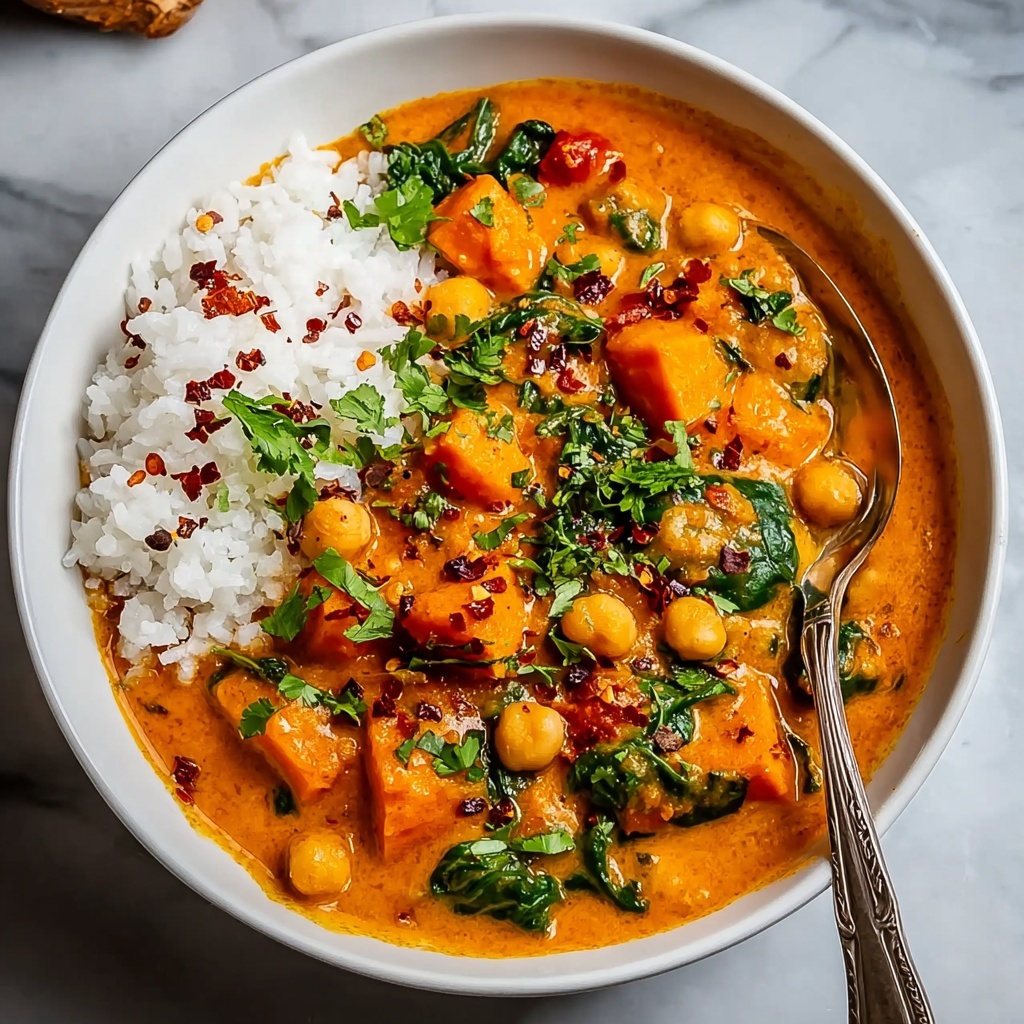
The hero ingredients in this Sweet Potato and Chickpea Curry Recipe are the sweet potatoes and chickpeas. Sweet potatoes bring a natural sweetness and a velvety texture that becomes wonderfully tender during cooking, providing the perfect counterpoint to the spices. Chickpeas contribute a subtle nutty taste and a firm bite that adds substance and protein to the dish. Coconut milk is another key component, lending creaminess and a mild richness that balances the warmth of the curry powder, turmeric, and cumin. Without these ingredients, the dish wouldn’t have its signature comforting blend of flavors and textures.
Alongside these central elements, you will find that basic pantry staples like onion, garlic, fresh ginger, and vegetable oil form the aromatic foundation for this recipe. These simple ingredients are easy to find and store, but their role is invaluable—they build layers of flavor that develop as you cook. If any items in the grocery store are unavailable, feathering in substitutes like shallots for onion, or using garlic powder sparingly if fresh garlic is missing, can work in a pinch, though the dish shines brightest when using fresh, quality produce. Spices such as curry powder, turmeric, and cumin are essential for the authentic taste, but you can experiment with blends that suit your pantry and palate.
- Sweet potatoes: These provide a natural sweetness and tender texture that melts into the curry sauce as it simmers. When selecting, go for firm, unblemished sweet potatoes with vibrant orange flesh for the best flavor and color.
- Chickpeas: They add a creamy yet slightly firm bite and a good source of plant-based protein. Using canned chickpeas saves time—just drain and rinse them well before adding.
- Onion: The base for almost every curry, onions develop sweetness and depth as they sauté. Yellow onions work best here for their balance of sweetness and savoriness.
- Garlic: Fresh garlic imparts sharpness and pungency that wakes up the other flavors. Mince it finely to release the fullest aroma.
- Fresh ginger: Grated ginger adds a zesty warmth that cuts through the richness. Choose firm, smooth ginger root for the freshest taste.
- Coconut milk: The creamy liquid balances spices and thickens the sauce. For the richest curry, use full-fat coconut milk rather than light versions.
- Curry powder: This spice blend brings warmth and complexity. Homemade or store-bought powders work, but ensure yours is fresh for the best impact.
- Turmeric: This golden spice contributes earthiness and a beautiful vibrant color. It’s also known for its anti-inflammatory properties.
- Cumin: Adds a warm, slightly nutty note that grounds the curry’s flavor profile. Toasting it briefly unlocks its aromatic oils.
- Salt and pepper: Seasoning adjusts the flavors to perfection. Always taste and adapt to your preference as you cook.
- Vegetable oil: Used to sauté the aromatics gently, allowing their flavors to meld. Neutral oils with high smoke points are best.
- Fresh cilantro: Garnishing with fresh cilantro brings a bright, herbal lift and a pop of color that finishes the dish beautifully.
How to Make Sweet Potato and Chickpea Curry Recipe
Making this Sweet Potato and Chickpea Curry Recipe is a straightforward process that comes together in just under 40 minutes. The success lies in building flavors gradually, starting with softening the onion and developing the aromas of garlic, ginger, and spices before adding the heartier ingredients. Simmering the sweet potatoes and chickpeas allows them to soak up the spiced coconut milk, creating a sauce that is creamy and comforting. This recipe’s method ensures that every component contributes to a well-balanced dish that is both flavorful and nourishing.
Step 1: Sauté the Onions to a Transparent Perfection
Begin by heating 2 tablespoons of vegetable oil in a large pot over medium heat. Once the oil is shimmering, add the finely chopped onion and sauté it gently until it becomes translucent, about 5 minutes. This step is crucial because slowly cooking the onion develops its natural sweetness and forms the flavor base for the entire curry. You want the onions to soften without browning; brown edges can give a bitter note, so keep the heat moderate and stir frequently to avoid this common mistake.
Step 2: Add Garlic and Ginger for Aromatic Depth
Next, stir in the minced garlic and the tablespoon of freshly grated ginger. Cook these aromatics for about 1 minute, just until fragrant. This brief cooking allows their sharp, zesty qualities to bloom and infuse the oil without burning, which would make the dish taste bitter. Watch carefully here because garlic especially can go from fragrant to burnt in seconds, so be ready to move on to the next step once you smell their fragrant notes.
Step 3: Toast the Spices to Unlock Their Flavors
Now add the curry powder, 1 teaspoon turmeric, and 1 teaspoon cumin to the pot. Stir continuously to toast the spices for about 30 seconds. This quick toasting step is essential as it activates the natural oils in the spices, giving the curry a more profound and rounded flavor. The kitchen will fill with the warm, earthy scent of spices—a sign that everything is progressing perfectly. Avoid skipping this step, as adding the spices directly without toasting can make the flavors less vibrant.
Step 4: Incorporate Sweet Potatoes and Chickpeas
Add the 2 large peeled and cubed sweet potatoes and the drained and rinsed can of chickpeas directly into the pot. Stir thoroughly to coat them with the fragrant spice mixture. Coating the vegetables and legumes in the spices before adding liquid ensures that each piece is infused with flavor. Be gentle when stirring to avoid breaking the chickpeas but make sure everything is evenly distributed so the curry cooks uniformly.
Step 5: Simmer with Coconut Milk and Water
Pour in the full 14-ounce can of coconut milk, and add enough water to just cover the vegetables and chickpeas in your pot. This usually means adding about half a cup of water, but adjust as needed. Bring the mixture to a boil, then reduce the heat to a gentle simmer and cover the pot. Let everything cook for 15 to 20 minutes, or until the sweet potatoes are tender when pierced with a fork. This simmering time is key to blending the flavors and softening the sweet potatoes to a creamy consistency. Stir occasionally and keep an eye on the liquid level so it does not dry out or become too thick.
Step 6: Final Seasoning and Garnish
Once the sweet potatoes are tender and the curry sauce has thickened slightly, season with salt and freshly ground black pepper to your taste. Stir well and cook for an additional minute to let the seasoning blend in. Lastly, sprinkle fresh cilantro on top before serving. This herbal garnish offers a fresh contrast that lifts the rich curry visually and in flavor. Never underestimate the power of finishing touches—they make a simple dish feel complete and restaurant-quality.
Pro Tips for the Best Sweet Potato and Chickpea Curry Recipe
Tip 1: Use Fresh Spices for Maximum Aroma
Spices lose potency over time, so for the best flavor, use freshly purchased curry powder, turmeric, and cumin. Toasting the spices yourself just before adding them releases their essential oils and enhances the dish’s complexity in a way pre-toasted blends often cannot match.
Tip 2: Don’t Overcook the Sweet Potatoes
Keep an eye on the simmering time and test the sweet potatoes with a fork early. Overcooked sweet potatoes can turn mushy and break down too much, affecting the curry’s texture. You want them soft but still holding their shape for an enjoyable mouthfeel.
Tip 3: Adjust Thickness By Varying Liquids
If you prefer a thicker, stew-like curry, use less water when adding the coconut milk. For a lighter sauce, add a little more water or coconut milk. This flexibility lets you tailor the curry to your liking, whether you want it spoonable or great for drizzling over rice.
Tip 4: Customize Heat with Fresh Chili
Even though this recipe does not call for chili, adding a small amount of fresh chopped chili or red pepper flakes during the spice-toasting step can infuse mild heat. Add gradually and taste as you go to control the spice level perfectly.
Variations and Substitutions
Make It Vegetarian
This Sweet Potato and Chickpea Curry Recipe is naturally vegetarian as written. To make it vegan, ensure the curry powder and other spices do not contain any animal-derived ingredients. Using vegetable oil keeps it plant-based. You can also swap the coconut milk for almond or cashew milk, though this will slightly change the creaminess and flavor profile. Adding other vegetables, like spinach or kale at the end of cooking, increases the nutrient content without affecting dietary preferences.
Make It Spicy
If you enjoy a spicier curry, add 1 finely chopped green chili or ¼ to ½ teaspoon of cayenne pepper along with the spices in step 3. You can also finish with a drizzle of chili oil or a sprinkle of crushed red pepper flakes when serving. Adjust the amount based on your heat tolerance, starting small and adding more gradually to avoid overpowering the gentle sweetness of the sweet potatoes.
Protein Swaps
If chickpeas are not your favorite, or you want to mix things up, there are several protein swaps that work well. Cooked lentils (red or brown) can be added during the simmering step for a similar texture with slightly different flavor. Firm tofu cubes, pan-fried before adding, provide a flavorful protein source with a silky texture. For a non-vegetarian option, cooked shredded chicken blends seamlessly into this curry if added near the end to warm through. Shrimp can also be a tasty addition—stir them in during the last five minutes of simmering for a tender bite. Keep in mind that these alternatives may alter cooking times slightly.
Dietary Modifications
This recipe is easily adapted for a gluten-free diet since there are no wheat-based ingredients. Just be sure to check that the curry powder does not contain any gluten-containing additives. For a dairy-free version—as written using coconut milk—it is naturally free from dairy. To reduce sodium, opt for low-sodium vegetable broth or water instead of any broth if desired, and use unsalted canned chickpeas or rinse thoroughly. Adjust salt at the end according to taste to avoid making it too salty.
How to Serve Sweet Potato and Chickpea Curry Recipe
Garnishes
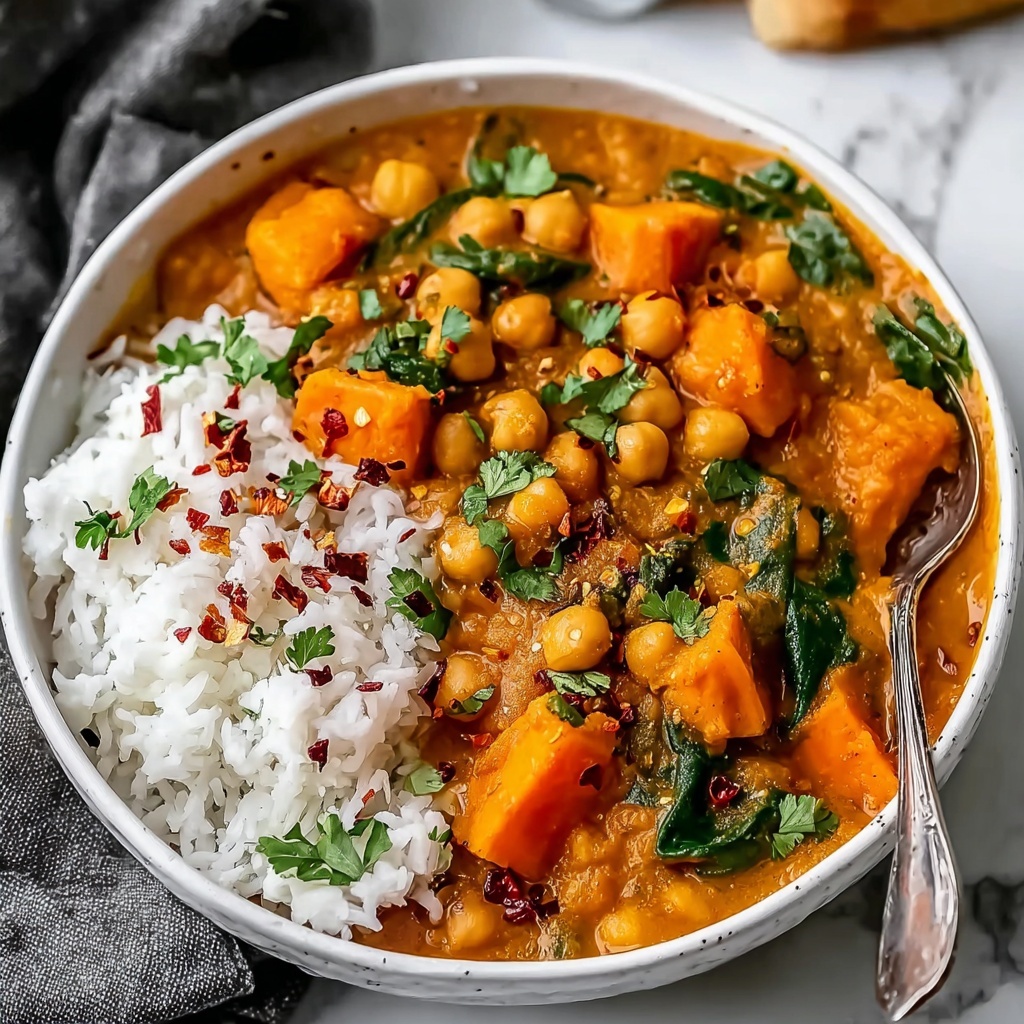
Using fresh cilantro leaves as a garnish adds a vivid green contrast that brightens the dish visually and refreshes the palate. You can also sprinkle toasted coconut flakes on top for a subtle crunch and to enhance the coconut flavor. Another lovely option is to add a dollop of plain yogurt or coconut yogurt, which introduces a creamy tang that balances the spices beautifully. A wedge of lime on the side provides an optional citrus zing that some love to squeeze over serving plates for an extra layer of brightness.
Side Dishes
This curry pairs wonderfully with basmati rice, offering a fluffy, fragrant base that soaks up the sauce perfectly. Naan bread or any warm flatbread is ideal for scooping up the curry and enjoying the combination of textures. Steamed greens like spinach or kale balance the richness with fresh, vibrant flavors. For a cooling side, cucumber raita or a simple cucumber salad provides crunch and contrast that complements the warm spices gracefully.
Creative Presentation Ideas
For a weeknight dinner, serve the curry simply in bowls topped with cilantro for an easy yet polished finish. At a dinner party, arrange the curry in a large serving dish with garnishes artfully layered on top, surrounded by small bowls of assorted chutneys, pickles, and fresh herbs to allow guests to customize each bite. For potlucks, consider roasting additional vegetables to mix in and serving alongside quinoa or couscous in individual portion cups for convenient, hand-held servings that encourage sharing and mingling.
Make Ahead and Storage
Storing Leftovers
Store any leftover Sweet Potato and Chickpea Curry in an airtight container in the refrigerator for up to 4 days. Glass or BPA-free plastic containers with tight-fitting lids work best for preserving flavor and preventing odors from other foods. Before refrigerating, let the curry cool to room temperature, but avoid leaving it out longer than two hours. When reheating, stirring occasionally will help maintain an even texture and prevent the sauce from separating.
Freezing Instructions
This curry freezes beautifully, making it perfect for meal prep. To freeze, cool the curry completely, then transfer it into freezer-safe containers or heavy-duty freezer bags, leaving some space for expansion. Label the containers with the date and freeze for up to 3 months. To thaw, place the container in the refrigerator overnight or use a gentle defrost setting if using a microwave. Once thawed, reheat on the stovetop or in the microwave, stirring frequently until piping hot throughout.
Reheating Methods
For stovetop reheating, warm the curry over medium heat, stirring occasionally to prevent sticking and ensure even heating. If the sauce has thickened too much, add a splash of water or coconut milk to loosen it. In the oven, place the curry in an oven-safe dish, cover with foil, and bake at 350°F (175°C) for about 15-20 minutes, stirring halfway through. The microwave is quickest—reheat in short bursts of 1 to 2 minutes, stirring in between to heat evenly and avoid hot spots that could burn. Whichever method you choose, warming slowly ensures the flavors stay vibrant and the texture remains smooth.
FAQs About Sweet Potato and Chickpea Curry Recipe
Can I use dried chickpeas instead of canned?
Yes, you can use dried chickpeas, but you will need to soak them overnight and then cook them before adding to the curry. This adds several hours of preparation but can yield a fresher taste and firmer texture. If you go this route, be sure to cook the chickpeas until tender before mixing them with the other ingredients to ensure even cooking.
What can I substitute if I don’t have coconut milk?
If coconut milk is unavailable, you can substitute with heavy cream, cashew cream, or a non-dairy milk like almond milk, though these alternatives will alter the flavor and texture. Heavy cream will give richness without the coconut notes, while almond milk is lighter and less creamy. If using these, you may want to add a small amount of coconut extract to help replicate the characteristic aroma of coconut milk in the dish.
How spicy is this curry, and can I make it milder?
This recipe is mildly spiced, with warmth from the curry powder but no hot chili peppers by default. To reduce spice even further, choose a mild curry powder blend and omit any optional chili additions. Mild spices make it family-friendly and approachable for those sensitive to heat, while still maintaining full flavor.
What side dish pairs best with this curry?
Basmati rice is the classic partner for this curry, providing a fragrant, fluffy bed that balances the creamy sauce. Naan bread or flatbreads are excellent choices as well if you want something more hands-on for scooping. Steamed or sautéed greens can add color and freshness for a complete meal experience.
Can I prepare this curry in advance?
Yes, this curry actually tastes better the next day as the flavors have time to meld. You can prepare it the day before and refrigerate it. Simply reheat gently before serving. It is also suitable for freezing if you want to make larger batches for future meals.
Is this recipe suitable for meal prep?
Absolutely! The Sweet Potato and Chickpea Curry keeps well in the fridge for several days and also freezes nicely for extended storage. Portion it into containers for quick grab-and-go lunches or easy dinners. Just reheat thoroughly and enjoy a comforting meal on busy days.
Can I add other vegetables to this curry?
Definitely. Vegetables like spinach, bell peppers, zucchini, or carrots can be added toward the end of cooking for extra color and nutrition. Just be mindful of cooking times; tender greens like spinach should go in last to avoid overcooking, while firmer vegetables like carrots may need a bit more simmering time.
Final Thoughts
This Sweet Potato and Chickpea Curry Recipe is one of those dishes that feels like home on a plate. Its gentle warmth and satisfying textures make it a reliable choice when you want a nourishing meal that is both simple and substantial. The combination of sweet potatoes and chickpeas swimming in a spiced coconut sauce strikes a lovely balance between comfort and flair, ensuring it earns a cherished spot in your cooking repertoire. Whether for a quiet evening or sharing with loved ones, it is a dish to savor slowly.
I hope this guide inspires you to give the Sweet Potato and Chickpea Curry Recipe a try soon and make it your own with the tips and variations shared here. Please do share your cooking stories and how you adapted the recipe to suit your tastes. Remember to check back for more recipes and culinary ideas that celebrate the joy of cooking and eating well from your own kitchen.
Print
- Prep Time: 10 minutes
- Cook Time: 26 minutes
- Total Time: 36 minutes
- Yield: 4 servings
- Category: Main Course
- Method: Stovetop
- Cuisine: Indian
- Diet: Vegan
Description
A comforting and flavorful Sweet Potato and Chickpea Curry made with a fragrant blend of spices, creamy coconut milk, and fresh cilantro. This hearty vegetarian curry is perfect for an easy weeknight meal and serves 4 people.
Ingredients
Main Ingredients
- 2 large sweet potatoes, peeled and cubed
- 1 can (15 oz) chickpeas, drained and rinsed
- 1 onion, finely chopped
- 3 cloves garlic, minced
- 1 tbsp fresh ginger, grated
- 1 can (14 oz) coconut milk
- 2 tbsp curry powder
- 1 tsp turmeric
- 1 tsp cumin
- Salt and pepper to taste
- 2 tbsp vegetable oil
- Fresh cilantro for garnish
Instructions
- Heat oil and sauté onion: Heat the vegetable oil in a large pot over medium heat. Add the finely chopped onion and sauté until translucent, about 5 minutes.
- Add garlic and ginger: Stir in the minced garlic and grated fresh ginger and cook for an additional 1 minute until fragrant.
- Toast spices: Add the curry powder, turmeric, and cumin to the pot. Toast the spices by stirring continuously for about 30 seconds to release their flavors.
- Add sweet potatoes and chickpeas: Add the cubed sweet potatoes and rinsed chickpeas to the pot. Stir well to coat them evenly with the toasted spices.
- Add coconut milk and simmer: Pour in the coconut milk and add just enough water to cover the vegetables. Bring to a boil, then reduce the heat to low and simmer uncovered for 15-20 minutes, or until the sweet potatoes are tender when pierced with a fork.
- Season and garnish: Season the curry with salt and pepper to taste. Garnish with fresh cilantro leaves before serving.
Notes
- You can adjust the thickness of the curry by adding more or less water when simmering.
- Serve with steamed rice or warm naan bread for a complete meal.
- The spices can be adjusted based on your heat preference.
- This recipe is vegan and vegetarian friendly.