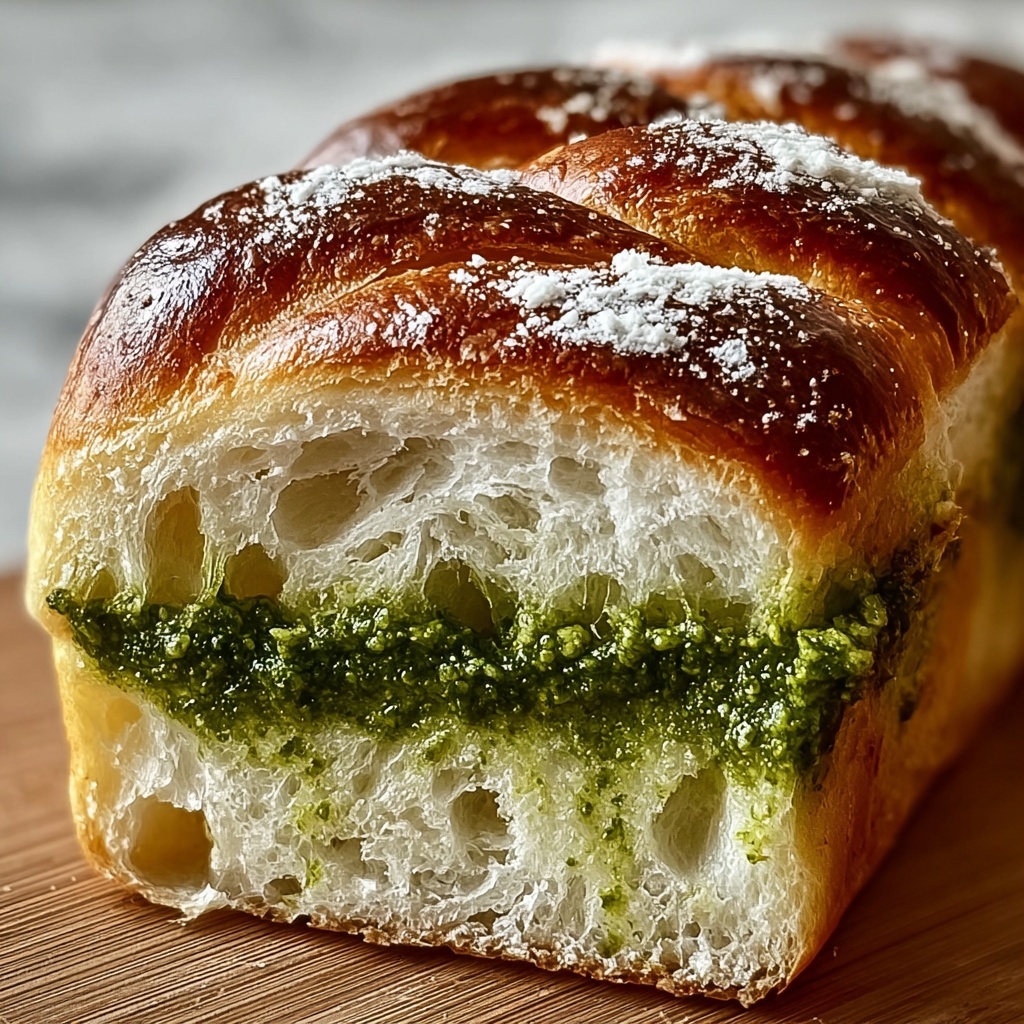
If you are looking to elevate your sourdough baking game, the Pesto Parmesan Sourdough Bread Recipe is an absolute must-try. This bread combines the tangy depth of naturally fermented sourdough with the herby brightness of fresh basil pesto and the nutty, savory punch from Parmesan cheese. The result is a crusty, aromatic loaf that boasts a tender crumb packed with flavor — perfect for everything from a fancy sandwich to an elegant side for dinner. Once you try this recipe, it’s guaranteed to become a beloved staple in your kitchen.
Ingredients You’ll Need
The beauty of the Pesto Parmesan Sourdough Bread Recipe lies in its simple, quality ingredients. Each one plays a specific role in achieving the perfect loaf, from the chewy texture to the bright herbal notes and golden crust. Using fresh and good-quality components ensures the flavor shines through every bite.
- Bread flour: Provides the necessary gluten strength for a chewy and airy crumb.
- Active sourdough starter: The natural leavening agent that gives the bread its signature tang and rise.
- Water: Hydrates the flour to create dough and helps activate fermentation.
- Salt: Enhances flavor and controls yeast activity for balanced fermentation.
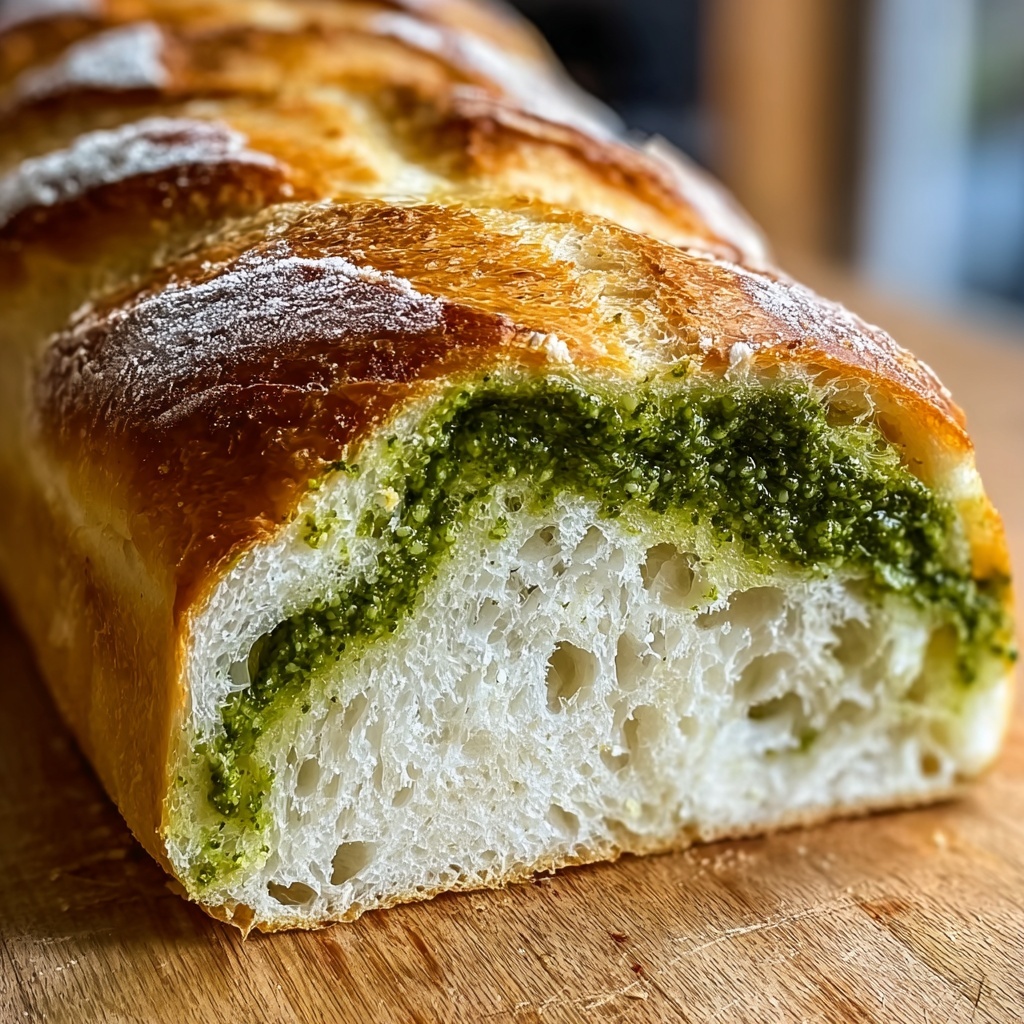
- Basil pesto: Adds aromatic herbiness and a vibrant green swirl throughout the bread.
- Grated Parmesan cheese: Brings a savory, nutty richness that complements the pesto beautifully.
How to Make Pesto Parmesan Sourdough Bread Recipe
Step 1: Mixing and Autolyse
Begin by combining bread flour, water, and your active sourdough starter in a large mixing bowl. Stir just until everything is incorporated, then cover and let the dough rest for 30 minutes. This autolyse phase hydrates the flour and kickstarts gluten development, setting the foundation for a well-structured loaf.
Step 2: Adding Salt
After the initial rest, sprinkle salt over your dough and mix it thoroughly to ensure even distribution. Salt not only enhances the flavor but also tightens the gluten network, creating better dough strength for a perfect rise.
Step 3: Stretch and Folds
Over the next two hours, perform a series of stretch and folds every 30 minutes. This technique gently strengthens gluten without harsh kneading, improving dough elasticity and crumb texture.
Step 4: Incorporating Pesto and Parmesan
Once the last fold is done, turn the dough out onto a floured surface. Spread the basil pesto evenly over the dough, then sprinkle the grated Parmesan on top. Fold the dough carefully to incorporate the pesto and cheese, creating beautiful pockets of flavor throughout the loaf.
Step 5: Shaping and Proofing
Shape the dough into a tight round ball and place it seam-side up in a well-floured banneton. Cover it to prevent drying, then refrigerate overnight for an 8 to 12-hour cold proof. This slow fermentation deepens the flavor and develops a chewy crust.
Step 6: Baking
Preheat the oven to 475°F (245°C) and place your Dutch oven inside to heat up. Transfer the dough onto parchment paper, score the surface with a sharp blade to allow expansion, then carefully place it in the hot Dutch oven. Bake covered for 20 minutes to trap steam, which helps build a crust, then remove the lid and bake for another 25 minutes until the crust turns a gorgeous golden brown.
Step 7: Cooling
Once baked, cool the bread completely on a wire rack before slicing. This resting period lets the crumb set and the flavors fully mature, making each slice a delightfully balanced bite.
How to Serve Pesto Parmesan Sourdough Bread Recipe
Garnishes
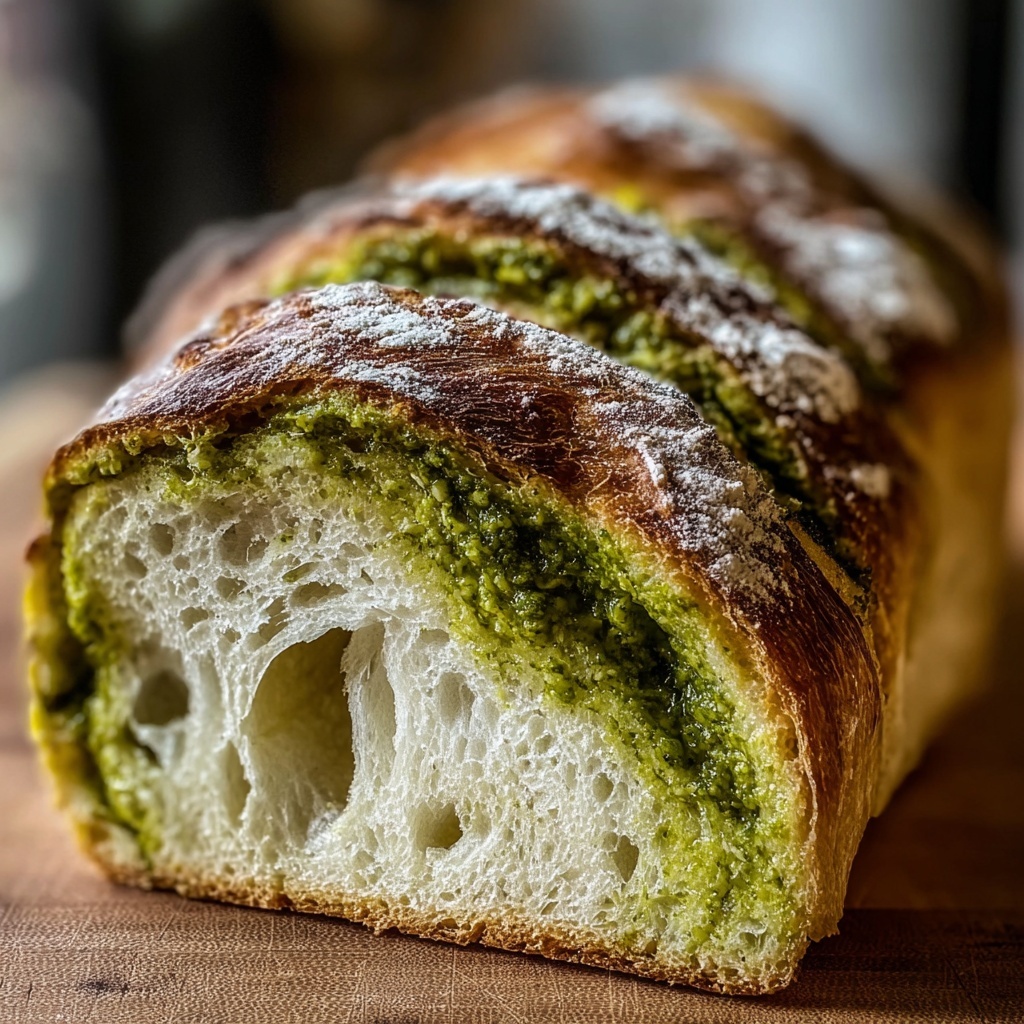
To enhance the presentation and flavor, consider brushing the warm loaf lightly with olive oil or melted butter for a glossy finish. Fresh basil leaves or a sprinkle of extra Parmesan cheese on top can also make each slice feel special and inviting.
Side Dishes
This Pesto Parmesan Sourdough Bread Recipe pairs wonderfully with a bowl of creamy tomato soup, a fresh caprese salad, or even as the base for gourmet open-faced sandwiches loaded with vegetables and cured meats. Its robust flavor stands up nicely to bold and fresh accompaniments.
Creative Ways to Present
Slice this loaf into thick pieces and toast them lightly for bruschetta topped with chopped tomatoes and basil. Alternatively, cube the bread and serve it alongside a cheese platter or use it to soak up flavors in a hearty stew. The possibilities are endless and delicious!
Make Ahead and Storage
Storing Leftovers
Keep any leftover slices in an airtight container or bread box at room temperature for up to two days. This keeps the crust crisp and the interior moist. Avoid refrigerating as it can cause the bread to stale faster.
Freezing
For longer storage, wrap the bread tightly in plastic wrap and then in foil, or place it in a freezer bag before freezing. This method preserves the flavor and texture for up to three months, so you can enjoy your homemade loaf anytime.
Reheating
To revive the crust and warmth, reheat frozen slices in a toaster or oven at 350°F (175°C) for about 5 to 7 minutes. For a whole loaf, warm it uncovered in the oven for 10 to 15 minutes to bring back that freshly baked magic.
FAQs
Can I use store-bought pesto for this recipe?
Absolutely! While homemade pesto offers the freshest flavor, a high-quality store-bought pesto works perfectly well and makes this bread even more accessible for busy bakers.
What type of sourdough starter is best?
A bubbly, active starter that has been fed within the last 4 to 6 hours is ideal. This ensures good fermentation and rise, resulting in a lighter, airier loaf.
Can I substitute Parmesan with another cheese?
You can experiment with hard cheeses like Asiago or Grana Padano for a similar savory note. However, Parmesan’s unique nuttiness pairs best with pesto.
How important is the cold proof in the fridge?
Cold proofing slows fermentation and helps develop deeper, more complex flavors. It also improves the dough’s handling and crust texture, so it’s highly recommended.
What if I don’t have a Dutch oven?
If you don’t have a Dutch oven, you can bake the bread on a preheated baking stone or heavy baking sheet, and create steam by placing a pan of hot water in the oven. It may require some adjustments, but still yields delicious results.
Final Thoughts
Baking this Pesto Parmesan Sourdough Bread Recipe is such a gratifying experience, with every step bringing you closer to a loaf bursting with flavor and aroma. Whether you enjoy it fresh from the oven or paired with your favorite meal, it’s a recipe that’s sure to impress and satisfy. So roll up your sleeves, embrace the delicious process, and treat yourself to this irresistible homemade bread. Happy baking!
Print
Pesto Parmesan Sourdough Bread Recipe
- Prep Time: 45 minutes
- Cook Time: 45 minutes
- Total Time: 12 hours 30 minutes
- Yield: 12 servings
- Category: Bread
- Method: Baking
- Cuisine: Italian
Description
This Pesto Parmesan Sourdough is a flavorful artisan bread combining the tangy depth of sourdough with the aromatic freshness of basil pesto and the savory richness of Parmesan cheese. Perfect for sandwiches, toasts, or as a complement to your favorite meals, this recipe guides you through a hands-on fermentation process ensuring a crusty exterior and soft, flavorful crumb inside.
Ingredients
Dough Ingredients
- 500g bread flour
- 100g active sourdough starter
- 350ml water
- 10g salt
Filling Ingredients
- 1/2 cup basil pesto
- 1/2 cup grated Parmesan cheese
Instructions
- Mix and Autolyse: In a mixing bowl, combine the bread flour, water, and active sourdough starter until just mixed. Let the mixture rest for 30 minutes to hydrate the flour and kickstart gluten development (autolyse).
- Add Salt and Combine: Add salt to the dough and mix thoroughly to evenly distribute it throughout the mixture.
- Gluten Development through Stretch and Folds: Perform a series of stretch and folds every 30 minutes over a two-hour period. This technique strengthens the dough’s gluten structure, improves dough elasticity, and help incorporate air.
- Incorporate Pesto and Parmesan: After the final fold, spread the dough gently on a floured surface. Evenly layer the basil pesto and grated Parmesan cheese over the dough, then carefully fold the dough over to integrate the ingredients without deflating it excessively.
- Shape and Proof: Shape the dough into a tight round ball and place it into a well-floured banneton basket to support rising. Cover the dough to prevent drying out.
- Cold Proof: Refrigerate the dough overnight for 8 to 12 hours. This slow fermentation develops flavor and improves dough structure.
- Preheat Oven and Dutch Oven: About 45 minutes before baking, preheat your oven to 475°F (245°C) with a Dutch oven inside to ensure it’s hot and ready for baking.
- Transfer and Score: Gently remove the proofed dough from the banneton onto a piece of parchment paper. Score the top of the dough with a sharp blade or lame to allow controlled expansion during baking.
- Bake Covered: Carefully place the dough, on the parchment paper, into the preheated Dutch oven and bake covered for 20 minutes. This traps steam and encourages crust formation.
- Bake Uncovered: Remove the Dutch oven lid and bake for an additional 25 minutes, allowing the crust to brown and become crisp.
- Cool Before Slicing: Transfer the baked bread onto a wire rack and let it cool completely before slicing to preserve crumb structure and prevent gumminess.
Notes
- Ensure the sourdough starter is active and bubbly before mixing to guarantee good rise.
- Use a sharp blade for scoring to get clean cuts and good oven spring.
- Cold proofing in the refrigerator develops complex flavors and improves dough texture.
- Adjust water slightly if the dough feels too dry or too wet; bread flour and humidity levels can vary.
- Allowing the bread to cool fully before slicing prevents a gummy crumb.