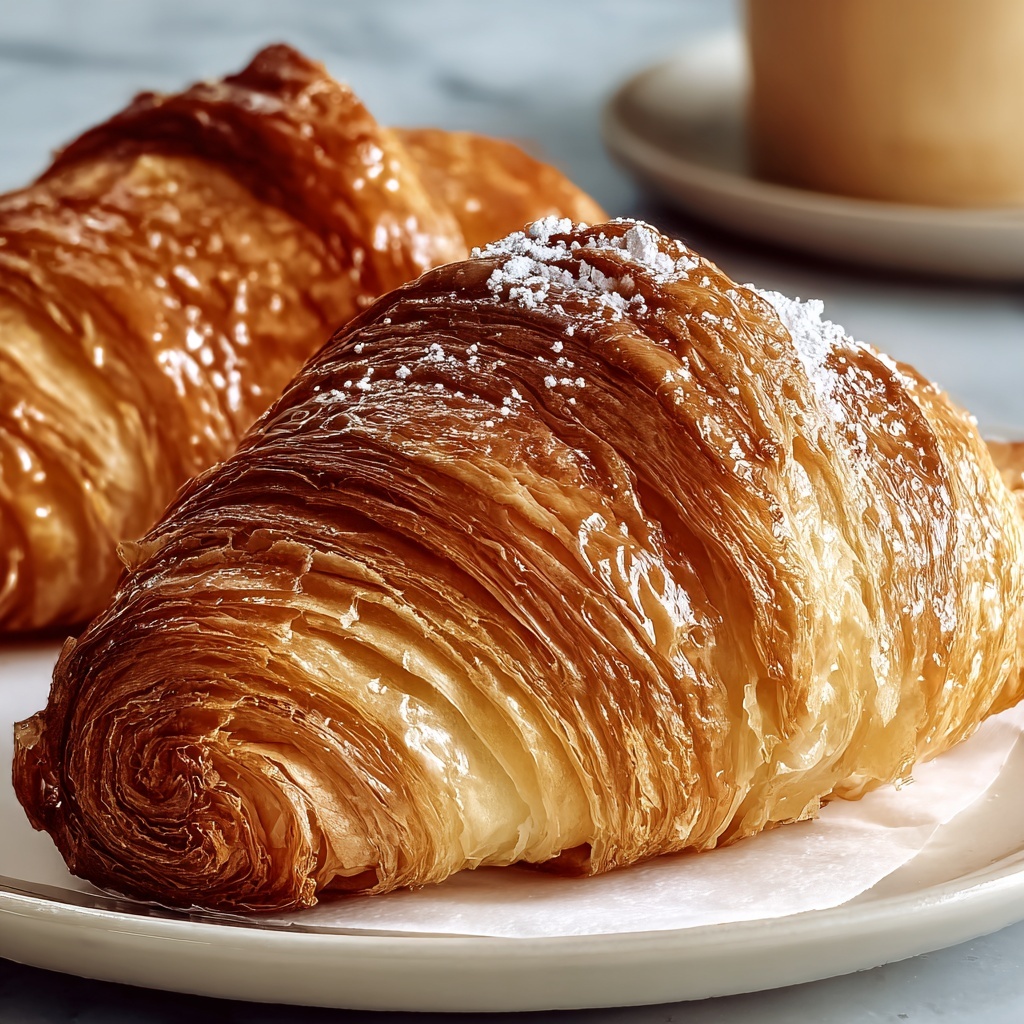
If you’ve ever bitten into a flaky, buttery croissant that felt like a little piece of heaven, you know exactly why the Classic Butter Croissants Recipe holds such a special place in the world of baking. This recipe is a joyful journey into layering rich, high-quality butter with a tender, crisp dough, creating those iconic flaky layers that practically melt in your mouth. Whether you’re making them for a cozy breakfast or an elegant brunch, these croissants bring warmth, comfort, and a touch of French bakery magic right into your kitchen.

Ingredients You’ll Need
Don’t let the delicate final product fool you—this recipe is built on simple but essential ingredients, each one playing a crucial role in creating perfect texture, flavor, and golden color. From the strength of the flour to the creaminess of the butter, every component works in harmony.
- Strong white bread flour: Provides the structure needed for those flaky layers that hold their shape beautifully.
- Salt: Balances the sweetness and enhances the overall flavor depth of the croissant dough.
- Caster sugar: Adds just the right touch of sweetness without overpowering the buttery richness.
- Instant yeast: Ensures a reliable rise and lovely lightness in the dough.
- Cool water: Keeps the dough temperature ideal for developing gluten while maintaining butter’s integrity.
- Chilled unsalted butter (high-quality recommended, at least 82% fat): The heart and soul of this pastry, supplying that luscious buttery flavor and flaky texture.
- Medium egg (for glazing): Gives the croissants a gorgeous golden shine and appealing crust.
How to Make Classic Butter Croissants Recipe
Step 1: Mix the Dough
Start by combining your flour, salt, sugar, and yeast in the bowl of a stand mixer fitted with a dough hook. Adding the dry ingredients first ensures an even distribution of flavors and yeast activation later on.
Step 2: Add Water and Knead
Slowly add the cool water and mix on low speed for 2 minutes, then increase to medium for about 6 minutes until a stiff but elastic dough forms. This gentle kneading develops the gluten network necessary for the croissant’s layered structure.
Step 3: Chill the Dough
Shape the dough into a ball, dust it lightly with flour, then place it in a plastic bag and chill in the fridge for an hour. This resting time relaxes the gluten and makes the dough easier to work with in the next steps.
Step 4: Roll Out the Dough
On a floured surface, roll the dough into a rectangle measuring about 60 by 20 centimeters. This is your canvas for layering in the butter.
Step 5: Prepare and Add the Butter
Flatten your chilled butter into a 40 by 19 centimeter rectangle using a rolling pin or your hands, then place it over the bottom two-thirds of the dough rectangle. This butter layer is critical for forming those croissant’s signature flaky sheets.
Step 6: Fold the Dough to Encase the Butter
Fold the top third of the dough down over half the butter, then fold the bottom third up, completely enclosing the butter inside. This seal traps the butter so it creates steam pockets as the croissants bake.
Step 7: Chill Again
Place the folded dough back in a plastic bag and refrigerate for 1 hour. Keeping everything cool prevents the butter from melting and ensures clean layers.
Step 8: Laminate Through Multiple Turns
Roll the dough out again to 60 by 20 centimeters, fold it into thirds (like a letter), then rotate it 90 degrees and repeat this rolling and folding process two more times, resting the dough in the fridge for an hour between each turn. This lamination is what creates all those flaky, buttery layers.
Step 9: Final Rest Overnight
After the last fold, refrigerate the dough overnight—about 8 hours. This slow rest settles the dough and allows a slight rise for lighter texture.
Step 10: Shape the Croissants
Roll the dough out to a 42 by 30 centimeter rectangle about 7 millimeters thick and trim the edges for neatness. Cut the rectangle into two long strips, then slice each strip into 12 triangles with a 12 cm base and 15 cm height.
Step 11: Roll and Curve
Stretch each triangle gently, then roll tightly from the base towards the tip, giving the classic croissant crescent shape by curving the ends slightly. This shaping technique helps with rise and presentation.
Step 12: Proof the Croissants
Place the shaped croissants on lined trays, cover them lightly, and let them proof at room temperature (18–24°C) for about 2 hours until they have doubled in size. This final rise is crucial for that airy texture.
Step 13: Egg Wash and Bake
Preheat your oven to 200°C (392°F). Brush each croissant with beaten egg to achieve a shiny, golden crust. Bake for 15 to 20 minutes until they turn a beautiful golden brown.
Step 14: Cool and Enjoy
Allow the croissants to cool slightly before serving so the layers set perfectly and you get that extraordinary flake and melt-in-your-mouth texture with every bite.
How to Serve Classic Butter Croissants Recipe
Garnishes
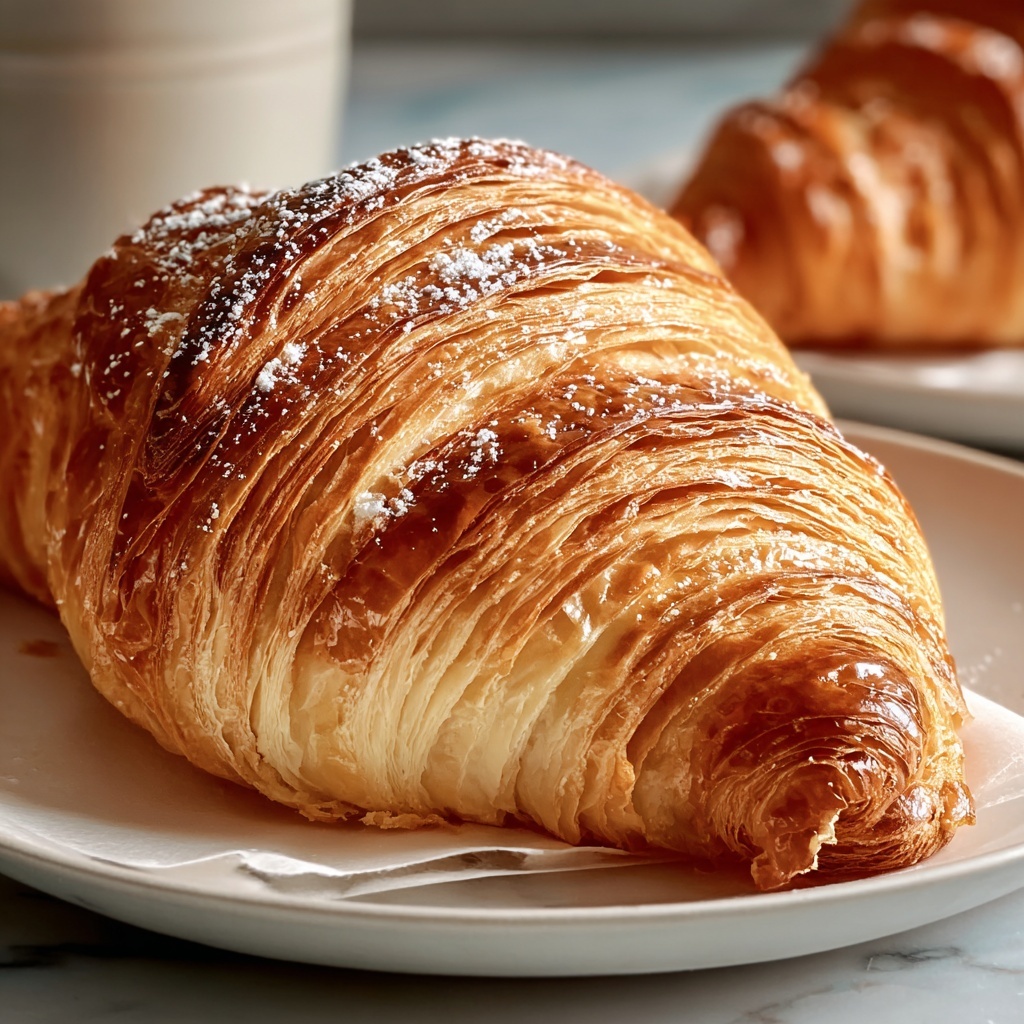
The beauty of croissants often lies in their simplicity, but you can enhance your serving by dusting them lightly with powdered sugar for a subtle sweetness or brushing melted butter right after baking for an extra glossy finish. For a savory twist, sprinkle some flaky sea salt on top of the egg wash before baking.
Side Dishes
These croissants pair wonderfully with fresh fruit preserves, creamy cheeses like brie or camembert, and rich coffee or tea. For a more substantial meal, serve alongside scrambled eggs or smoked salmon for a truly indulgent brunch experience.
Creative Ways to Present
Turn your croissants into mini sandwiches filled with ham and cheese for a delightful snack or use them as a base for desserts like almond croissants by adding sliced almonds and frangipane before baking. Serving these croissants warm alongside a small pitcher of honey or chocolate spread will delight your guests and elevate any meal.
Make Ahead and Storage
Storing Leftovers
If you have any croissants left after your feast, store them in an airtight container at room temperature. They will stay fresh for up to two days, retaining much of their flakiness and buttery flavor.
Freezing
Classic Butter Croissants Recipe works beautifully for freezing. Wrap cooled croissants tightly in plastic wrap and foil, then freeze for up to one month. When ready, thaw overnight at room temperature to keep that tender texture intact.
Reheating
To bring your croissants back to life, reheat them in a preheated oven at 180°C (350°F) for about 5-7 minutes. This will revive their crisp exterior and warm the layers inside without drying them out, making them taste almost freshly baked again.
FAQs
Can I use regular butter instead of high-fat butter?
While you can, using high-fat unsalted butter makes a significant difference in flavor and texture, giving your croissants that rich buttery taste and flaky layers. Regular butter may lead to less distinct layers and a softer crumb.
Is it necessary to chill the dough between folds?
Yes, chilling between folds is essential to keep the butter solid and prevent it from melting into the dough. This process ensures crisp, flaky layers and prevents greasiness.
Can I make this recipe without a stand mixer?
Absolutely! While a stand mixer helps with consistent kneading, you can mix and knead the dough by hand. It will take a bit more effort, but the results can be just as delicious.
How long can I proof the croissants?
The proofing time of about 2 hours at room temperature is ideal for light, fluffy croissants. Proofing longer risks over-fermentation, resulting in less rise and a sour flavor.
Can I add fillings like chocolate or almond paste?
Yes! Once you’ve rolled the croissants into triangles, place a small amount of chocolate or almond paste near the base before rolling. This adds a delightful surprise inside while keeping the classic buttery layers intact.
Final Thoughts
Making the Classic Butter Croissants Recipe at home is a rewarding adventure that brings a little bakery magic right to your kitchen. Each step, from mixing the dough to the final golden bake, is a labor of love that results in flaky, buttery perfection worth every minute. Trust me, once you try making these croissants yourself, there’s no turning back — your mornings will never be the same!
Print
Classic Butter Croissants Recipe
- Prep Time: 3 hours (including mixing, laminating, and chilling intervals)
- Cook Time: 15-20 minutes
- Total Time: 12 hours (including overnight rest and proofing)
- Yield: 12 croissants
- Category: Breakfast, Pastry
- Method: Baking
- Cuisine: French
Description
Classic buttery croissants made from scratch with a rich, flaky texture achieved through multiple folds of chilled unsalted butter and dough. Perfectly golden and airy, these croissants are ideal for breakfast or an elegant snack.
Ingredients
Dough Ingredients
- 500g strong white bread flour
- 10g salt
- 40g caster sugar
- 10g instant yeast
- 250ml cool water
Butter Block
- 250g chilled unsalted butter (at least 82% fat), flattened into a 40x19cm rectangle
Glaze
- 1 medium egg, beaten (for egg wash)
Instructions
- Mix Dry Ingredients: In a stand mixer fitted with a dough hook, combine the strong white bread flour, salt, caster sugar, and instant yeast to evenly distribute the ingredients.
- Add Water and Knead Dough: Gradually add the cool water and mix on low speed for 2 minutes. Increase speed to medium and continue kneading for about 6 minutes until a stiff dough forms.
- Initial Rest: Shape the dough into a ball, dust lightly with flour, place in a plastic bag, and refrigerate for 1 hour to relax the gluten.
- Roll Out Dough: On a floured surface, roll the dough into a 60x20cm rectangle, preparing it for the butter layering.
- Prepare Butter Block: Flatten chilled unsalted butter into a 40x19cm rectangle and place it over the bottom two-thirds of the dough rectangle.
- Encase Butter: Fold the top third of the dough over half the butter, then fold the bottom third up, sealing the butter completely inside the dough envelope.
- Chill Dough: Place the butter-encased dough into a plastic bag and refrigerate for 1 hour to firm up the butter and dough.
- Laminate Dough – First Turn: Roll the dough into a 60x20cm rectangle, fold into thirds (like a letter), rotate 90 degrees, then roll and fold again two more times, chilling the dough for 1 hour between each turn to develop layers.
- Overnight Rest: After the final fold, refrigerate the dough overnight (about 8 hours) to rest and allow slight rising.
- Roll and Cut Crescents: Roll the rested dough out to a 42x30cm rectangle, approximately 7mm thick. Trim edges for neatness.
- Shape Triangles: Cut the dough into two long strips, then cut each strip into 12 triangles with a 12cm base and 15cm height.
- Roll Croissants: Gently stretch each triangle slightly, then roll tightly from the base to the tip. Slightly curve the ends to form the classic crescent shape.
- Proof Croissants: Place shaped croissants on lined baking trays, cover loosely, and let proof for 2 hours at a temperature between 18–24°C until they double in size and become puffy.
- Preheat Oven and Glaze: Preheat your oven to 200°C (392°F). Brush the croissants gently with the beaten egg wash to achieve a shiny, golden crust.
- Bake Croissants: Bake croissants in the preheated oven for 15–20 minutes or until they turn a rich golden brown. Remove from oven and allow to cool before serving for best texture.
Notes
- Use high-fat unsalted butter (minimum 82% fat) for best lamination and flavor.
- Chilling time between folds is crucial to ensure the butter stays firm and layers develop properly.
- Proof croissants in a warm, draft-free environment to ensure proper rising without collapse.
- For crispier croissants, bake on a preheated baking stone or steel.
- Croissants can be frozen after shaping; proof and bake directly from frozen, adding extra baking time.